

Microcurrent Point Stimulation (MPS) for Scar Release
How does it work?
Let’s pretend that scar tissue is like putty; in the beginning it’s soft and very malleable, but then over time it gets harder and stiffer to a point where it can no longer be shaped. Scar tissue is very much the same, in that as time goes on, the window for softening it and making it smooth closes.
If we can talk science for a moment, healthy skin is negatively charged (remember all those ion pumps in high school?). Conversely, scar tissue that doesn’t heal well becomes positively charged over time. On a cellular level this scar tissue (collagen fibres) are laid down in a disorganised fashion and feel inflexible and stiff to touch. If these fibres remain disorganised then healing can be inhibited, leading to pain and other adverse effects. This is why multiple studies have been conducted to explore how electrical stimulation can enhance healing.
Microcurrent treatment uses a very gentle negative electrical current to reverse the polarity of the scar tissue from positive to negative again. Once this reversal in polarity is accomplished the scar is once again receptive to massage and stretching. It can be broken down and unstuck from the surrounding structures. My goal is to ensure thorough and effective scar release of not only the scar itself, but the affected fascia.
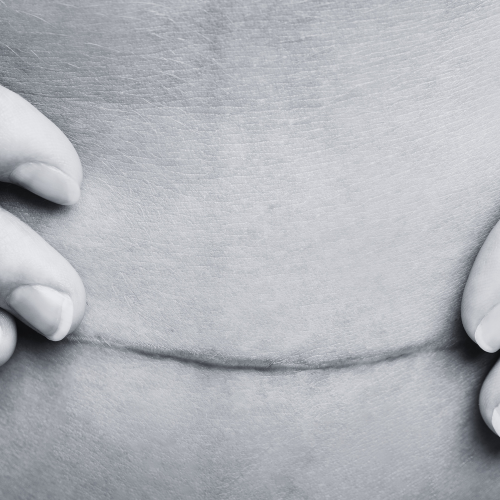
Microcurrent Point Stimulation (MPS) has many wonderful uses, however my favourite will always be its ability to soften and release scars both new and old, especially C-section scars. There can be a great deal of emotion tied to scars and how they occurred. If I can help someone improve the way they think and feel about their scar, then my cup is full.
Treatment Approach
While both MPS and Myofascial Release™ are individually supported by research for scar treatment, their combined use may be considered an emerging therapy.
My Training
I have training in MPS application through educational materials and clinical experience. My manual therapy techniques were learned through Myofascial Release™ training (2005).
In situations where I recommend this combined approach, I provide detailed information about:
Current evidence supporting each therapy individually
My training and clinical experience
Potential risks, benefits, limitations, and realistic outcome expectations
How this approach relates to conventional treatment options
Does it hurt?
MPS may produce sensations of mild tingling, particularly with newer scars. Intensity can be adjusted based on your tolerance. Manual scar release following MPS may be uncomfortable like a deep tissue massage and cause temporary soreness.
How many sessions might I need?
Treatment duration varies significantly based on individual factors including:
Size and age of the scar
Degree of adhesion present
Individual healing response
Genetic factors affecting scar tissue formation
Therapeutic goals
Your individual treatment plan will be discussed during your initial assessment.
Maintaining Results
Following treatment, I provide recommendations for scar mobilization and stretching exercises to support ongoing tissue mobility. Adequate hydration is also recommended to support fascial health.
Factors Affecting Treatment Outcomes
Treatment outcomes depend on several factors:
Assessment: MPS combined with manual therapy is most appropriate when adhesions are contributing to symptoms. When scar appearance concerns are related to skin laxity or body composition changes, alternative approaches may be more suitable.
Integrated Protocol: My treatment protocol combines MPS with manual fascial release techniques to address multiple aspects of scar tissue restriction.
Treatment Duration: Sessions are designed to allow adequate time for both MPS application and manual therapy (90 minutes for initial visits, 60 minutes for follow-ups).
When is the best time for scar treatment?
Scar treatment can begin once you've been cleared by your healthcare provider, typically 6-8 weeks post-surgery. While the period from 6 weeks to 5-6 months may allow for more efficient progress, treatment can be beneficial at any stage of healing. Treatment protocols may need to be adjusted based on scar age and tissue characteristics.
Is my scar too old?
While newer scars have been found to respond better to treatment, old scars may also be successfully treated with MPS and/or myofascial release. Please book a free consultation to see if you would benefit from scar release therapy.
What can I expect?
Initial Visit (90 minutes):
Comprehensive scar and soft tissue assessment
Evaluation of surrounding areas along the myofascial chain
Discussion of your specific goals and concerns
For c-section scars: core function assessment, spinal alignment evaluation, and diastasis recti screening
MPS application (approximately 20-30 minutes depending on size of the scar)
Manual scar therapy (approximately 30 minutes)
Home exercise recommendations
Follow-up Visits (60 minutes):
Progress assessment
MPS application
Manual therapy
Updated home exercise program
Treatment plans are individualized based on your assessment findings, goals, and response to therapy.
Questions about whether this approach is right for you?
I'm happy to discuss whether combining MPS with manual therapy may be appropriate for your specific situation. Please schedule a free 15 minute virtual consultation if you’re not sure if this is right for you.
Don’t see an answer to your question?
Still not sure about MPS Scar Release Therapy? Drop me a line or book a free 15 min virtual consultation :)